
Las Vegas Monsoon Prep: A Window, Solar, and Screen Checklist
Las Vegas monsoon season runs roughly July through September — and it doesn't ease in. One afternoon the sky is clear; the next, a 40 mph wall of dust is barreling across the valley with driving rain right behind it. That combination is brutal on the exterior of your home. Dust gets driven into seals, mineral-heavy rain bakes onto hot glass, and screens that were already brittle from a year of UV exposure tear at the corners.
The good news: a little prep work in May and June saves a lot of money and headaches in October. This checklist walks through what to clean, inspect, and schedule across your windows, solar panels, and screens — phased for before, during, and after monsoon season.
Before the Storms: May and June Prep
This is the window where prep work actually pays off. Get your exterior squared away before the first haboob rolls through — usually late June or early July — and you'll come out of monsoon season with much less damage to fix.
Windows
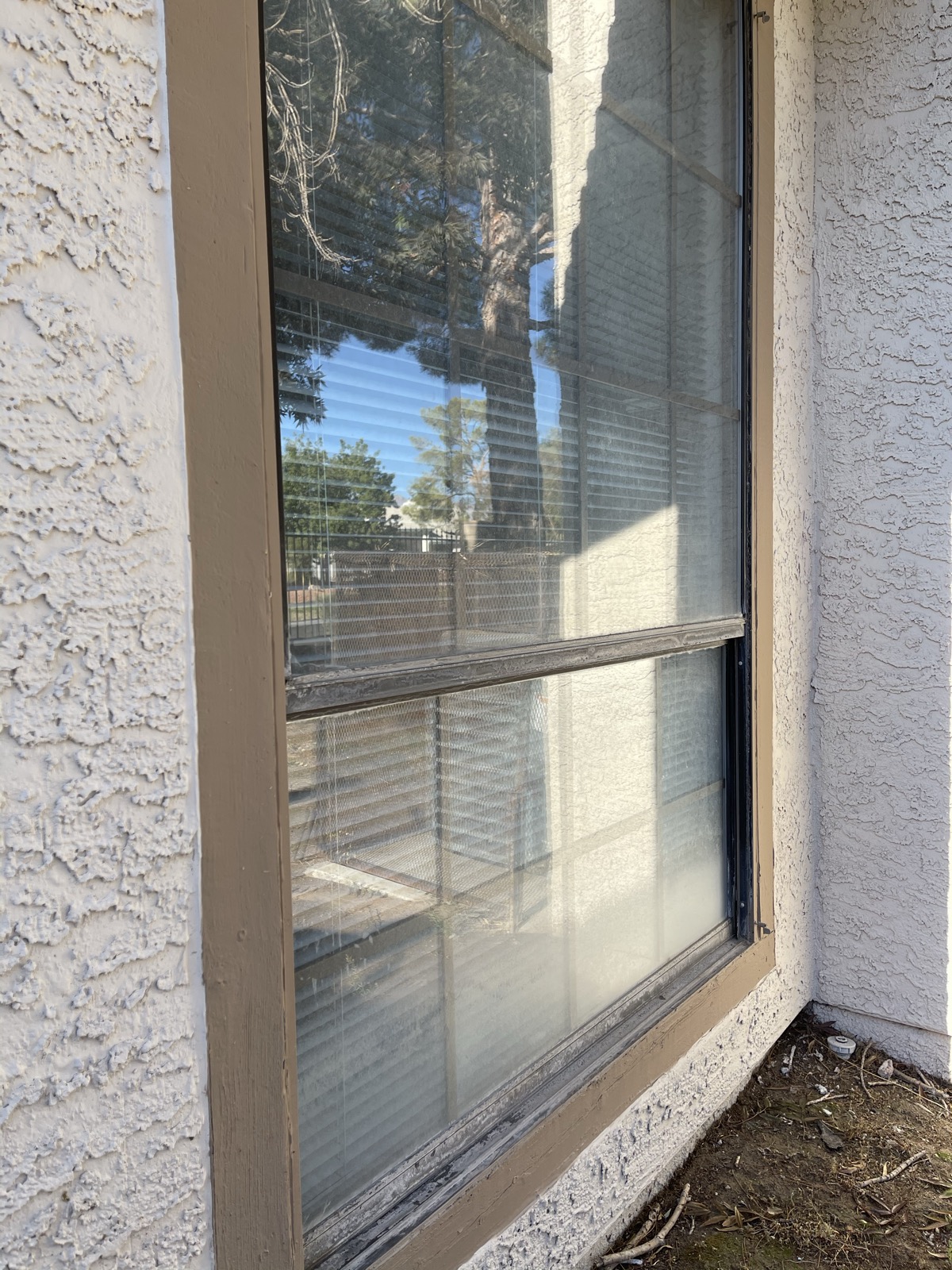
Schedule a full exterior clean before the storms start. Going into monsoon with already-dirty glass means rain mixes with existing dust and bakes into a mineral film that's far harder to remove later. Las Vegas tap water averages 278 ppm hard water mineral content, so any rain that hits dusty glass leaves spots fast.
While you're at it, inspect window seals and weatherstripping for cracked rubber gaskets or gaps in caulking around the frame — driven rain finds every weakness during a monsoon storm. Also look for early hard water staining from spring sprinkler overspray; catching it now is much cheaper than tackling baked-on deposits in October. (See how to fix hard water stains on windows for what to look for.)
If you have two-story or high-access glass, book pre-monsoon service now — calendars get tight in late June.
Bundle window cleaning, solar panel cleaning, and a screen inspection into one pre-monsoon visit. Same access setup, one appointment, and your whole exterior is squared away before the first haboob.
Solar Panels
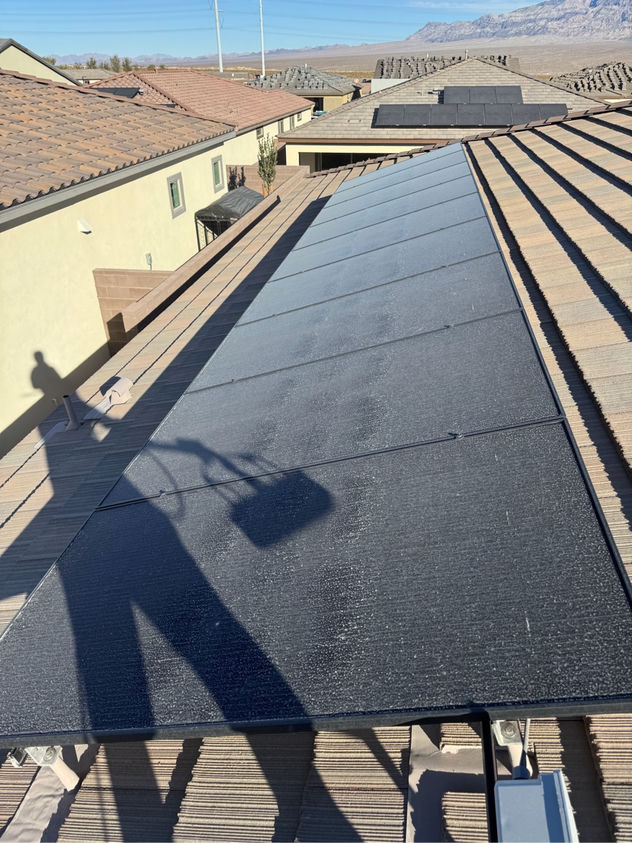
Get panels cleaned before the season starts. This matters more than most homeowners realize: clean panels shed dust faster during storms because there's nothing for incoming dust to bond with. Dirty panels going into monsoon become caked panels coming out — the kind that need a real restoration clean rather than a standard wash. (Rain alone won't do this work for you — see solar panel cleaning vs. rain.)
While the team is up there, check for pre-existing micro-cracks or hot spots. Monsoon-driven debris and the rare bit of hail make existing damage worse. If you already have a critter guard or pigeon proofing installed around the array, eyeball it for damaged sections — wind during dust storms can lift anything that was marginal.
Screens
Inspect every screen. UV exposure from April and May has already brittle-baked the mesh; if a screen tears slightly now, the first 40 mph gust will finish it. Look at frame corners too — builder-grade aluminum frames separate at the corners after several years of thermal cycling, and a damaged corner means an entire screen can pop out during a windstorm.
Watch for sagging mesh and oxidized frames; both are signs the screen won't survive monsoon intact. Our when to replace your window screens article walks through the seven warning signs in detail. For solar screens, tighten or replace any clips that have loosened — a marginal clip and a 50 mph haboob is how panels turn into projectiles.
During Monsoon: July Through September
Once monsoon season is active, your maintenance mindset changes. Don't try to keep the house looking pristine — you'll be wasting money chasing the next storm. Focus on spot-treating the things that cause permanent damage.
Don't Clean During Active Dust Events
This is the most common mistake we see. A homeowner books a full clean, the team finishes on Tuesday, and a haboob rolls through Wednesday afternoon. Now everything's dirty again — and worse, the dust mixed with humid air and rain has bonded to the glass overnight. Time cleanings around weather windows; a good window cleaning company will do the same when scheduling around forecasts.
Bird droppings and tree sap etch glass within 48 hours in summer heat. If you spot them, rinse with water immediately — don't wait for the next scheduled cleaning. Dry-wiping grinds dust into the glass, so always water first.
Spot-Clean Bird Droppings and Tree Sap Immediately
These are acidic and they etch glass — usually within 48 hours in summer heat. A drop you ignore in July becomes a permanent mark by October. Rinse with water first (don't dry-wipe; it grinds any dust into the glass) and follow up with a soft cloth.
Check Screens After Every Major Wind Event
Walk the exterior after any storm with sustained winds above 30 mph. Look for:
- Screens dislodged from their tracks
- Mesh tears starting at the corners
- Solar screen clips that have failed
- Anything that fell from a second-story window
Catching damage right after a storm is much cheaper than catching it in October when every screen shop in town is backed up.
Watch Solar Production
If your monitoring app shows panel output dropping 15–20% from your June baseline, it's likely coated dust — not a panel issue. A mid-season cleaning during a calm stretch can recover most of that production through the back half of summer. Skipping it usually costs more in lost solar generation than the cleaning itself would.
After the Storms: October Recovery
Monsoon season usually winds down by late September. October is the right month for a full recovery clean across windows, panels, and screens — before the low-sun-angle winter months and well ahead of any holiday-season showings or gatherings.
Full Exterior Window Clean
Expect mineral spotting on every south- and west-facing window. The combination of monsoon rain, residual dust, and 110°F summer heat creates a film that requires professional removal — it's beyond what a household squeegee will handle. Our best time of year to clean windows in Las Vegas guide goes deeper on October timing.
Solar Panel Deep Clean
This isn't a maintenance wash — it's a restoration clean. Panels that went through monsoon dirty often have caked-on mineral deposits that need extra dwell time and a specialty mesh-and-glass cleaning solution. Doing this before the low-sun-angle winter months protects your November-through-February production, when every kilowatt-hour counts more.
Replace Damaged Screens
Anything torn, sagging, or oxidized gets replaced now. Waiting until spring means brittle screens going into another summer of UV exposure, which means a worse position going into next year's monsoon.
How to Think About Pre-Monsoon Scheduling
The best pre-season visit is a combined window-and-panel package, ideally with a screen inspection bundled in. One trip, one set of access setup, and your whole exterior is squared against the storms. Most Las Vegas neighborhoods we serve — Summerlin, Henderson, Centennial Hills, North Las Vegas, Mountain's Edge — book out roughly two to three weeks ahead in May and four-plus weeks ahead by mid-June.
If you only have time for one thing, do the windows. Mineral-baked glass is the single most expensive monsoon outcome — once etching sets in, the only fix is restoration or replacement. Panels and screens have more recoverable downside.
Wind-exposed neighborhoods take more punishment from haboobs than central valley homes — especially Mountain's Edge, Summerlin foothills, and any property near open desert. If you're in one of these areas, plan two pre-monsoon visits if possible: a deep clean in May and a quick refresh in mid-to-late June.
Frequently Asked Questions
When is monsoon season in Las Vegas?
The official North American monsoon runs June 15 through September 30, but the active stormy stretch in the Las Vegas valley is usually mid-July through early September. Haboobs can roll in with little warning during this window. Late June is the right deadline to have pre-monsoon prep wrapped up.
Should I clean my windows during monsoon season?
Generally no. Cleaning during the active storm window means each haboob undoes your work within days. The exceptions are bird droppings, tree sap, and other acidic substances that will permanently etch glass if left in summer heat — those need immediate spot treatment, not a full clean. Save the full exterior clean for October.
Do haboobs damage solar panels?
They can. The risk isn't the dust itself but the debris carried with it — sand, gravel, and small branches at 40+ mph velocity. Most modern panels handle this without outright failure, but they accumulate micro-scratches that gradually reduce light transmission. A pre-monsoon inspection catches existing damage before the season makes it worse.
How often should I clean windows during monsoon season?
For most Las Vegas homes, plan one pre-monsoon clean in May or June and one recovery clean in October. Cleaning in the middle of active storm season is usually wasted money unless you're staging a home for sale or have specific event timing.
Can rain alone clean my solar panels during monsoon season?
No — and monsoon rain is often worse for panels than no rain at all. Brief, dusty rain creates a muddy residue that bonds to the glass surface harder than the original dust. Real cleaning still requires purified water and proper equipment, regardless of how many storms passed through.
What's the best month to schedule pre-monsoon cleaning in Las Vegas?
May or early June. Booking gets tight in late June as homeowners realize the first storms are coming. A combined window-and-panel package is the most efficient pre-season visit — the whole exterior gets squared away in one appointment.
A clean home going into monsoon comes out of monsoon in much better shape than a dirty one. If you'd like Neon to handle pre-season prep for your windows, solar panels, or screens — or all three in one visit — request a free estimate or book online below. Want a refresher on how monsoon dust actually damages glass? Read how desert dust damages your windows.